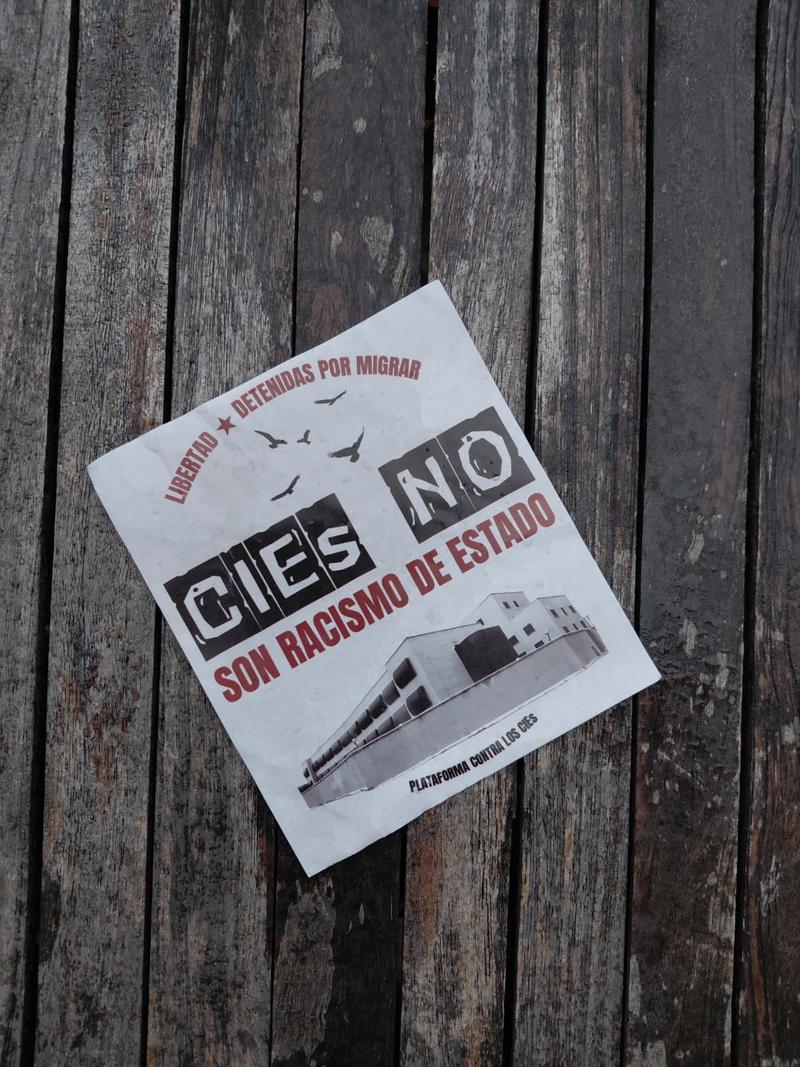
Went to the annual CIE demonstration and made some takes to close the year.
The CIE of Aluche is a Foreigner Detention Centre where migrants are confined under police custody while awaiting deportation, despite having committed no crime. It functions as a prison without judicial sentencing and has been widely denounced by human rights organizations for its conditions and lack of transparency. The CIE stands next to the former site of Carabanchel Prison, the largest prison in Spain and a central pillar of repression during Franco’s dictatorship, where political prisoners and antifascist militants were incarcerated and tortured. Its closure and demolition in 2008 sparked major controversy: neighborhood groups and memory collectives demanded the prison be preserved as a site of historical memory, but it was erased, leaving an empty lot and unresolved debates about justice and remembrance.
Every year on December 30th, a demonstration takes place outside the CIE to denounce deportations, institutional racism, and the continuity of authoritarian practices from Francoism to the present. Chants and megaphones break the imposed silence of the area, turning the site into a space of resistance.
I made several recordings available on aporee following the demonstration’s path. Here is a selection:
This recording is a 36-minute take documenting the final stretch of the demonstration, from Aluche station to the CIE of Aluche, and the gathering in front of the detention center. As the march arrives, protesters concentrate outside the CIE and raise their voices as loudly as possible so that those held inside can hear their support. Chants, shouting, and amplified voices fill the street, mixed with the intense noise of surrounding traffic. Public speeches denouncing deportations, institutional racism, and migrant detention are read aloud to the crowd. From behind the fences and barred windows, detainees respond by greeting and waving back, creating a moment of direct connection across the physical and acoustic boundary imposed by the institution.
This recording captures an interview with the spokesperson of the march conducted immediately after its conclusion, offering reflections on the demonstration, its significance, and the ongoing struggle against migrant detention.